A small addition in rural Connecticut reframes the rear of a developer-built spec house as a pavilion open to the landscape. Conceived as a flexible suite for the owners, a room that adapts to reading, working, and slow gathering, the new volume extends onto an existing bluestone patio and opens it to the meadow beyond.
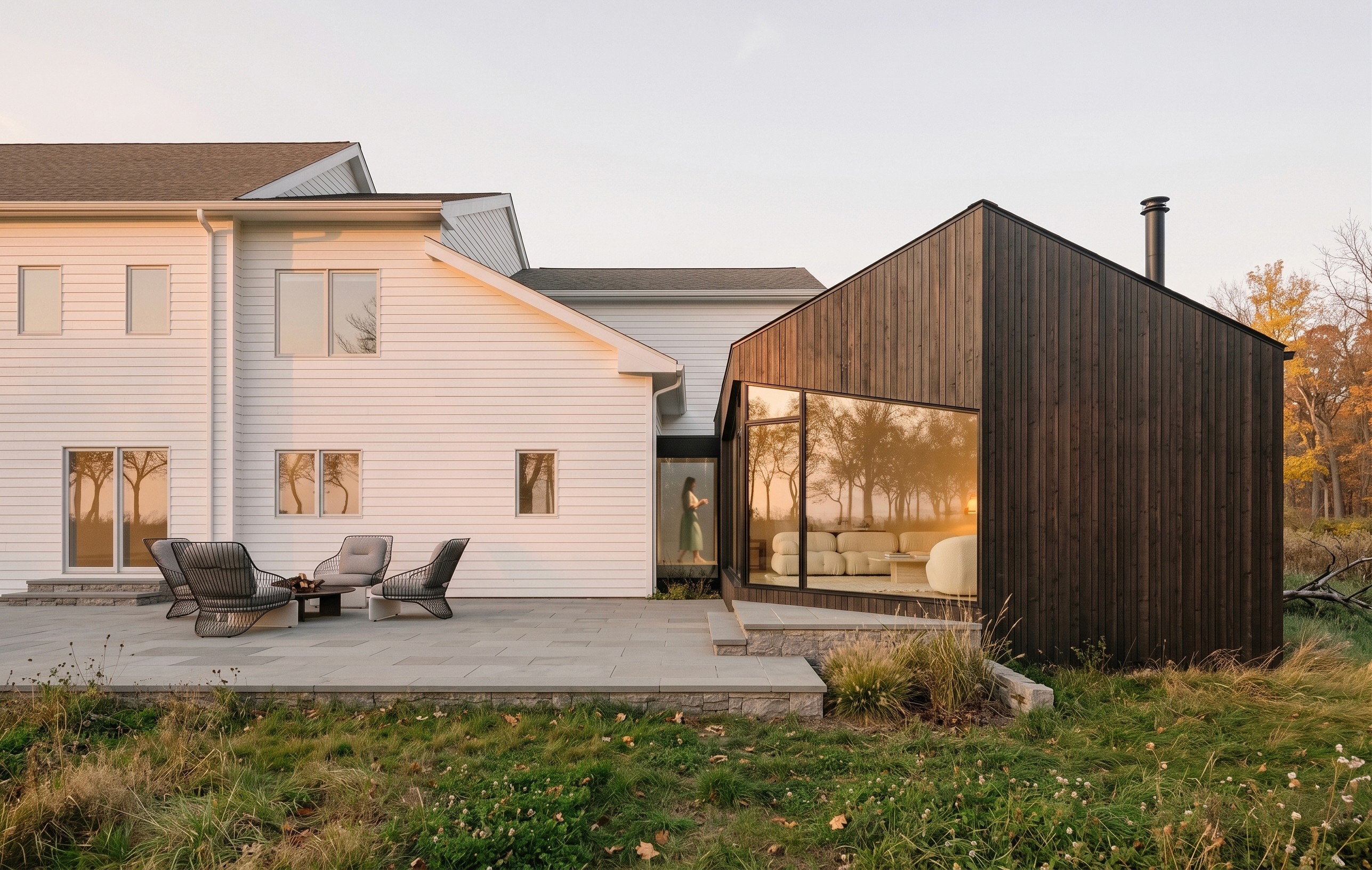
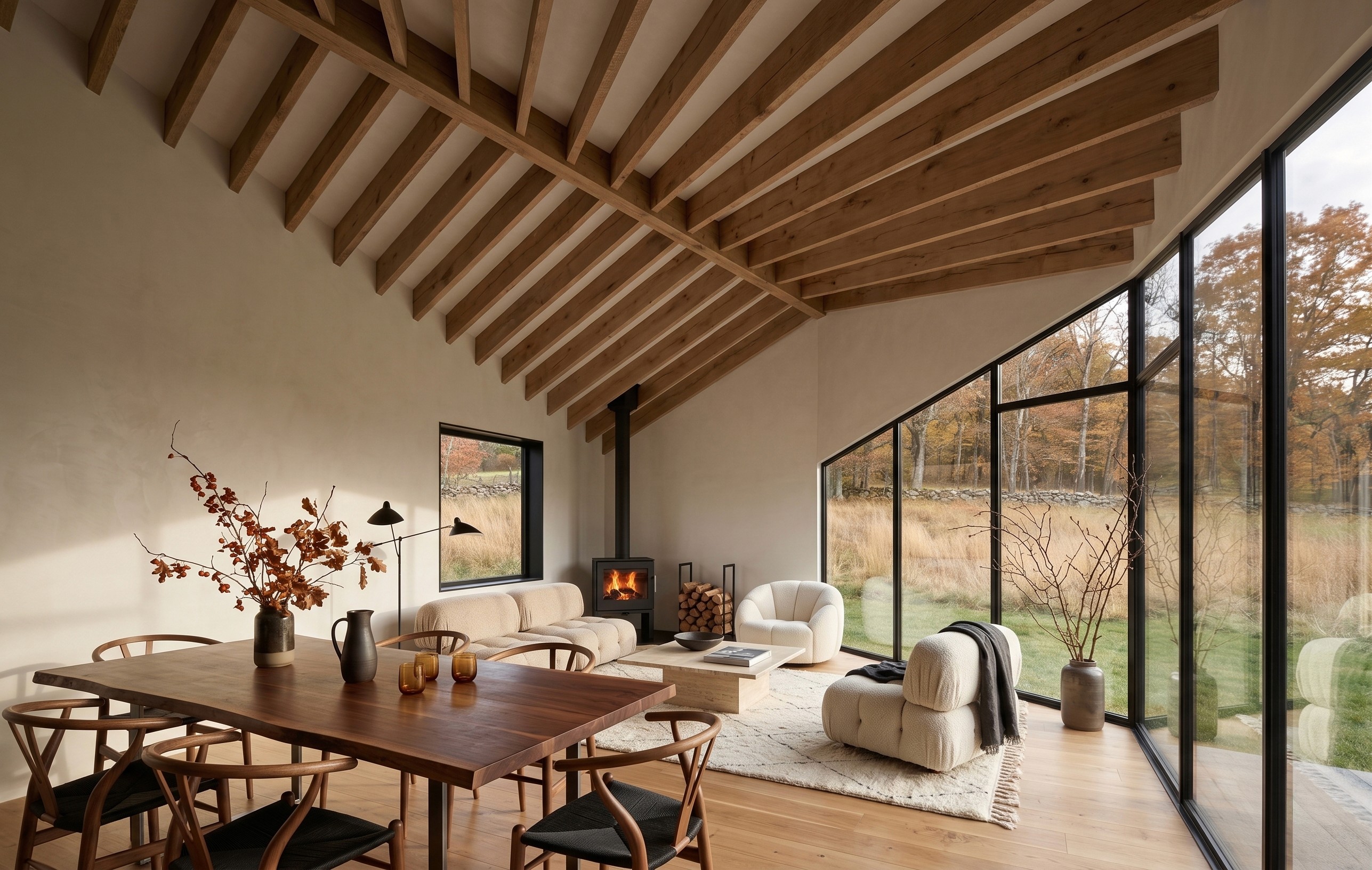
The pavilion is set in deliberate counterpoint to the host structure. Where the original house presents the familiar grammar of white clapboard, gabled roofs, and domestic pitch, the addition answers with shou sugi ban cladding, a taut asymmetric profile, and a single expansive aperture. The contrast is not polemical but compositional: two buildings in conversation across a shared threshold of stone.
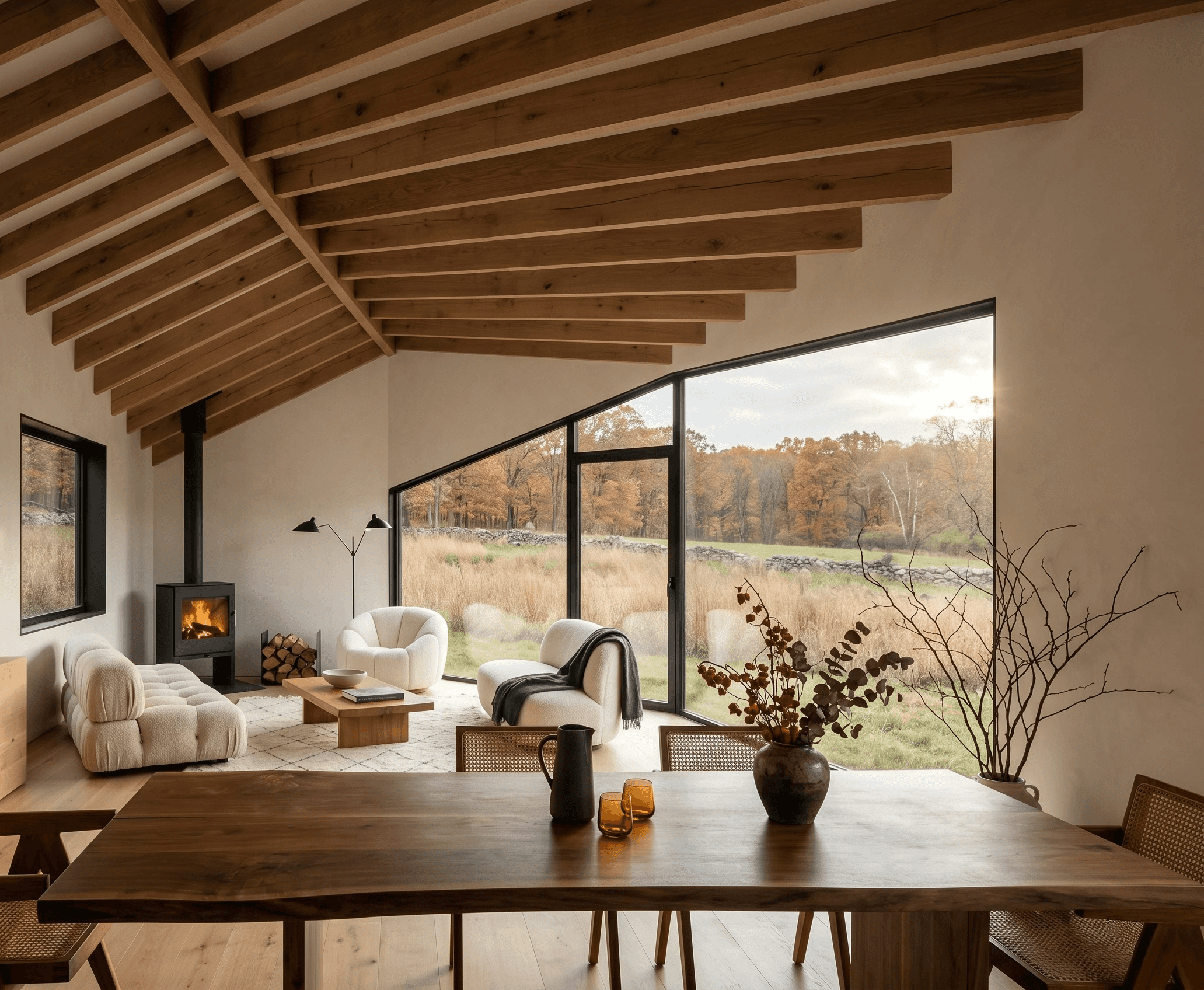
Inside, the roof folds into a polygonal geometry, and a rhythm of exposed oak rafters organizes the space overhead. Plaster walls, a wide-plank oak floor, and a blackened steel stove anchor the room in a restrained material palette. A tall picture window aligned with the patio frames the stone wall and tree line beyond, drawing the landscape into the interior as a fixed view.
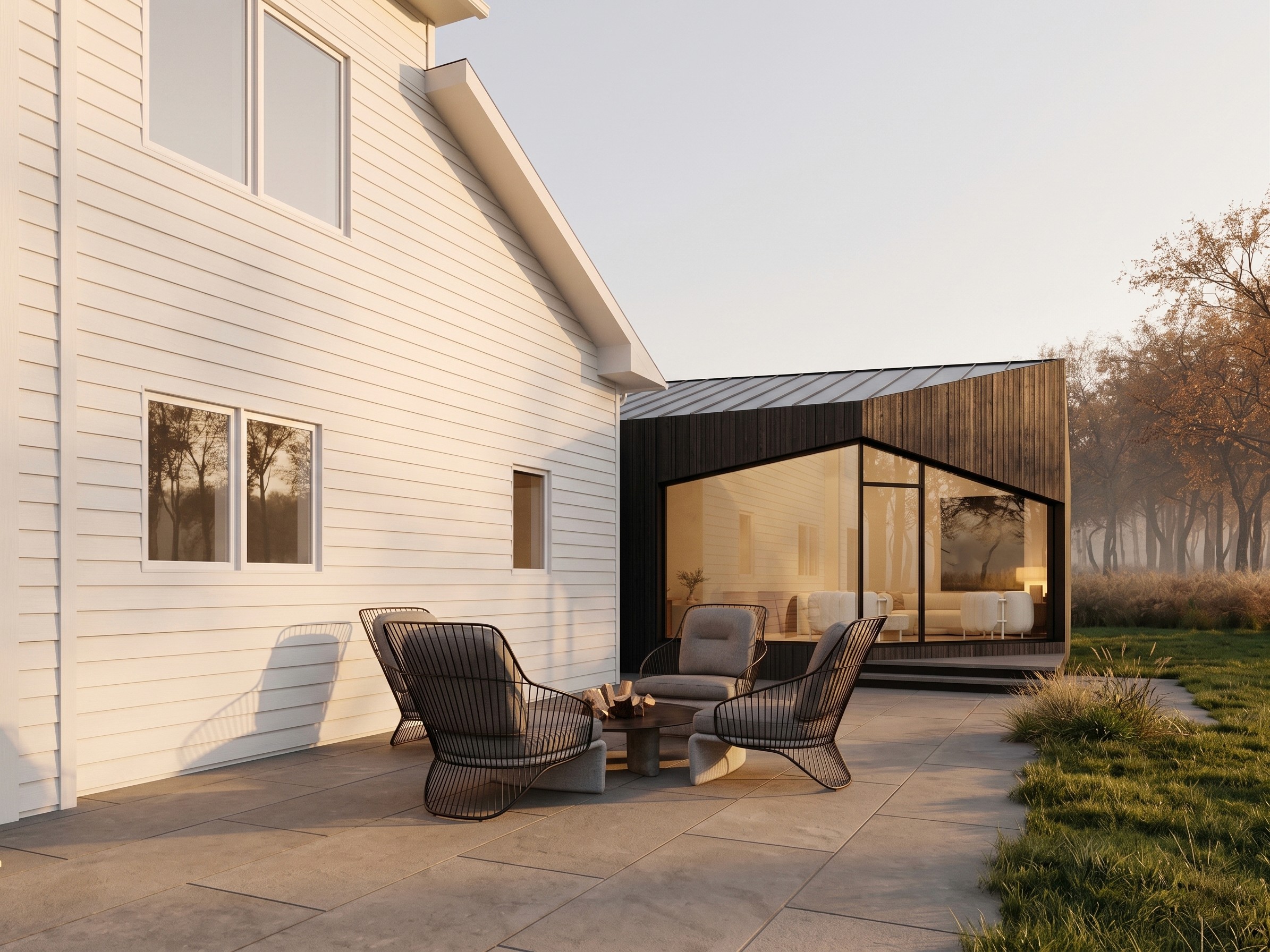
The project is modest in footprint but pointed in intent, an addition that refuses to mimic its host and uses difference to give the existing house a center of gravity it did not previously have.