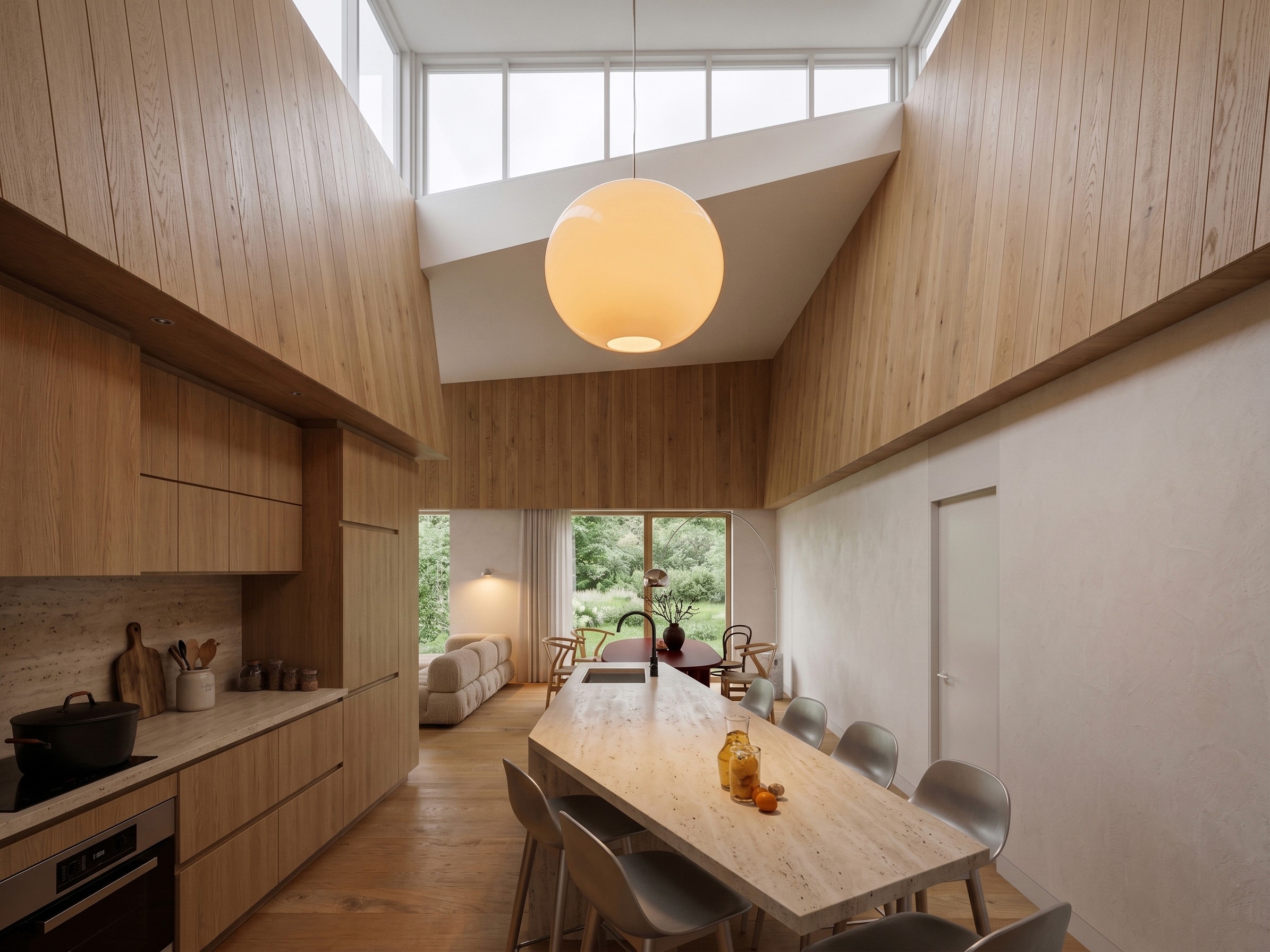
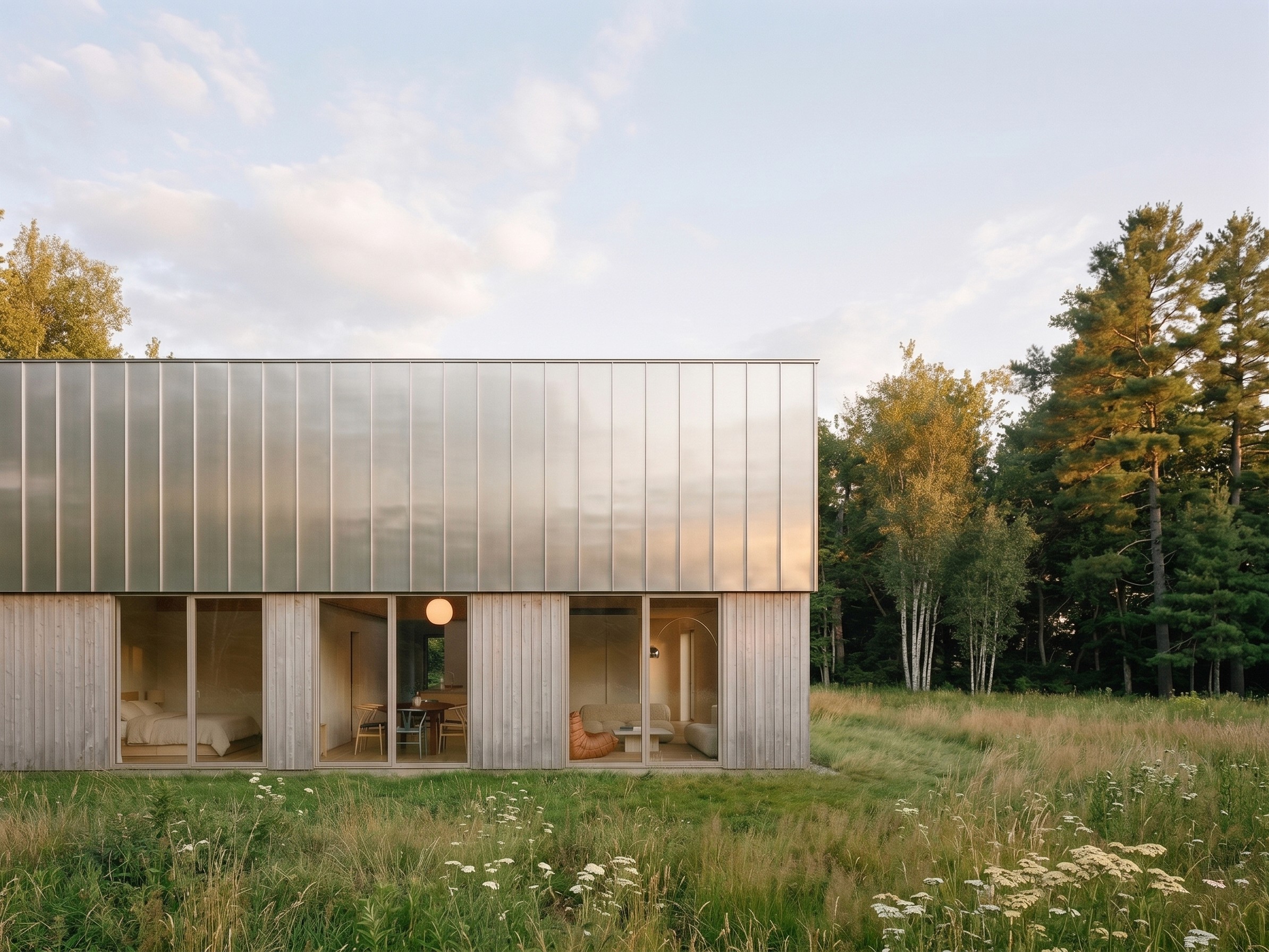
The plan is organized around a central kitchen, the spatial and social heart of the house. Dining, living, and bedrooms radiate outward from this core, each opening back toward it. Above the kitchen, a dramatic clerestory — the oculus — pulls daylight deep into the center of the plan, producing a volume that is at once domestic and almost sacral in its intensity.
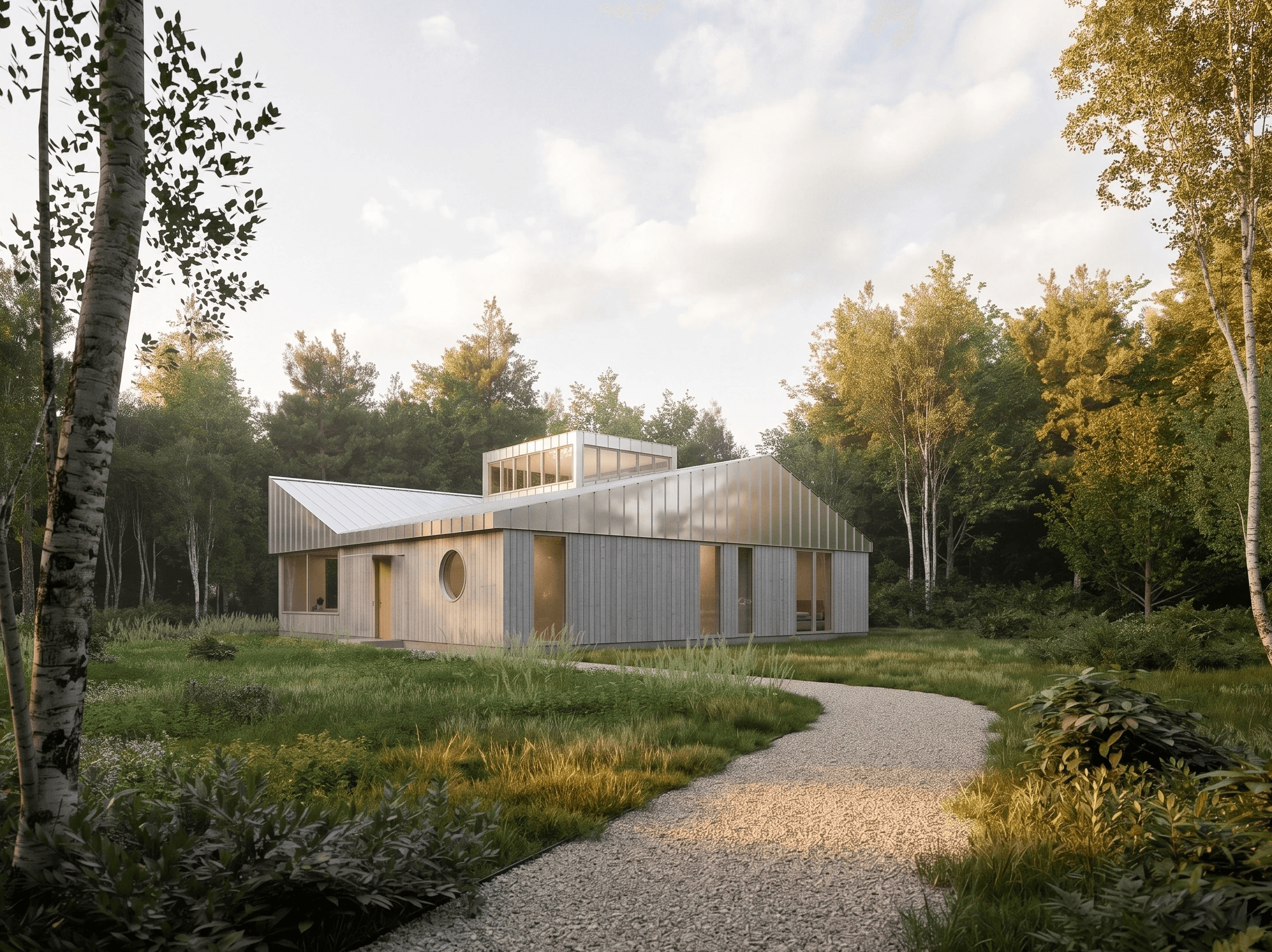
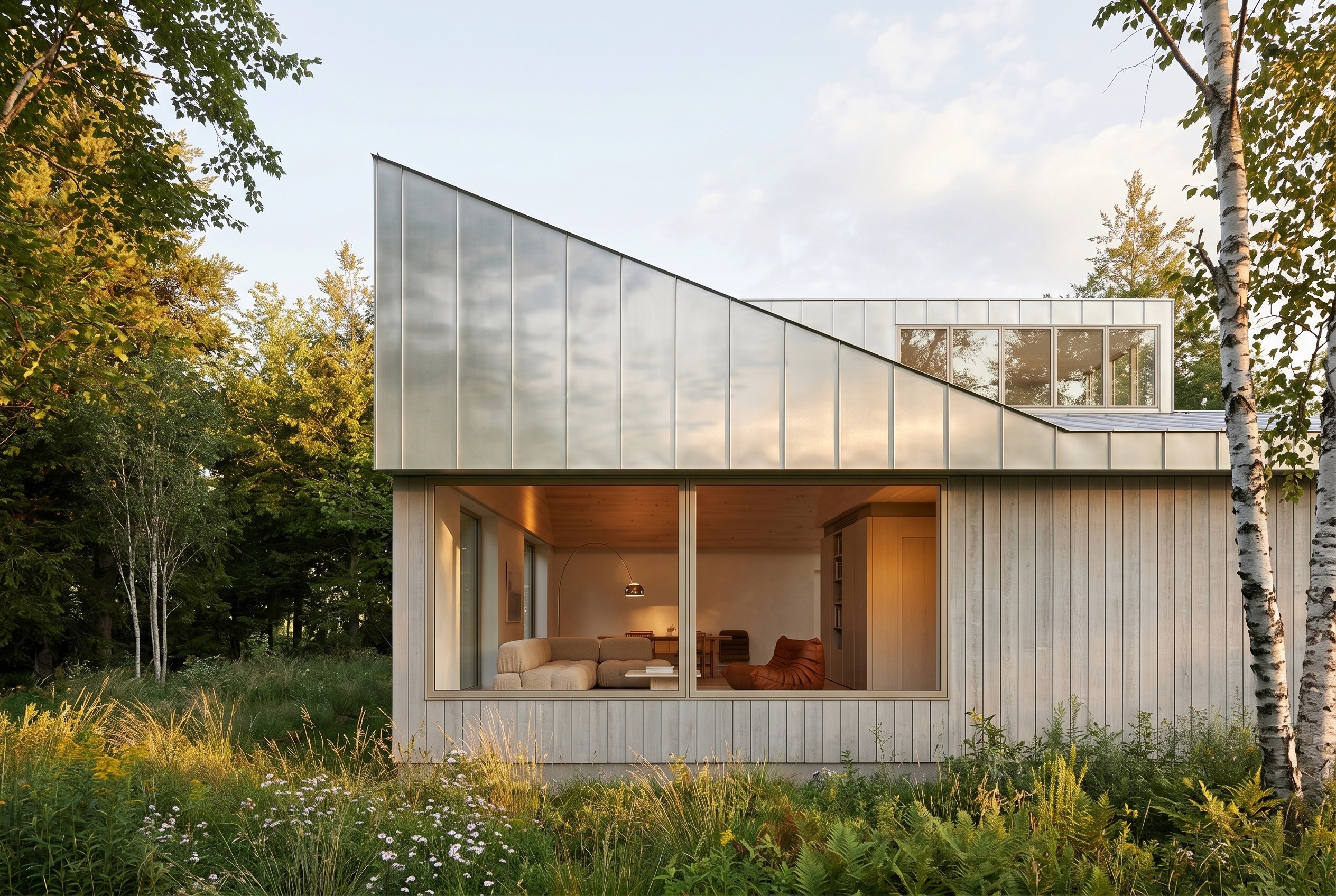
The roofline borrows from the vernacular vocabulary of American residential forms but refuses to settle into any single reading. Approached from one direction the house presents a flat roof; from another, a gable; from a third, a shed. This ambiguity is not incidental — the roof is shaped by what happens beneath it, rising over the living spaces to amplify their scale and dropping over the bedrooms to compress them into intimacy.
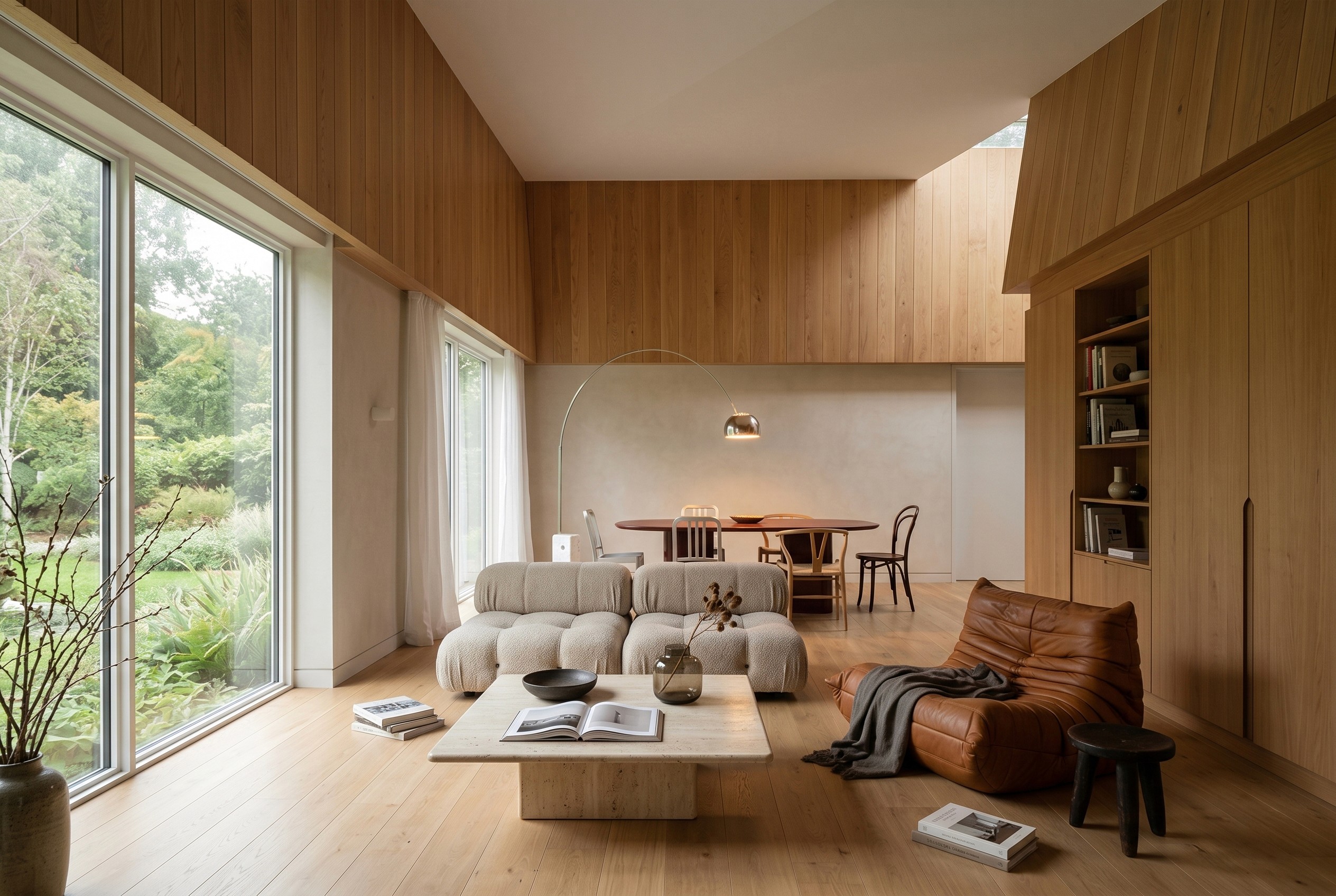
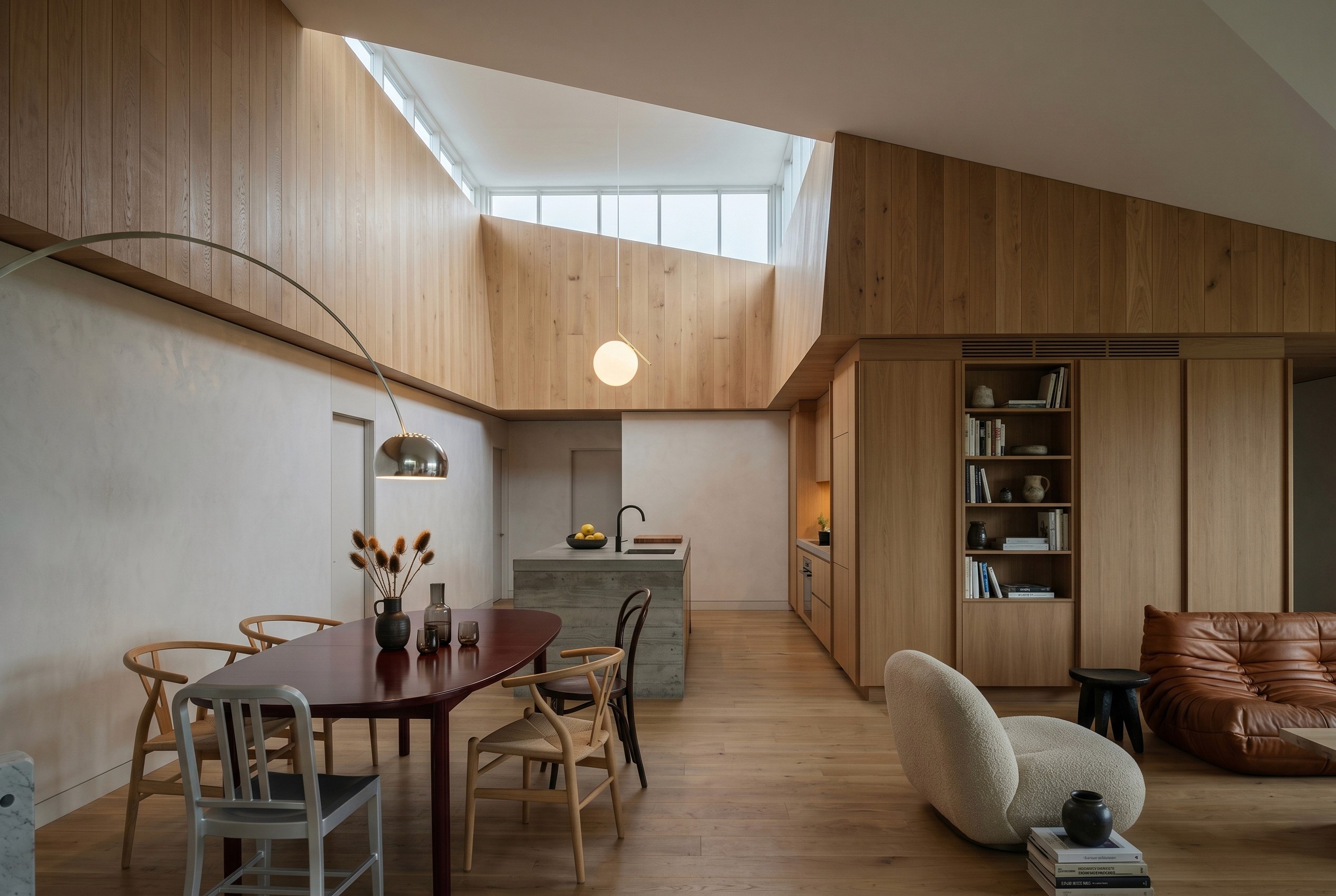
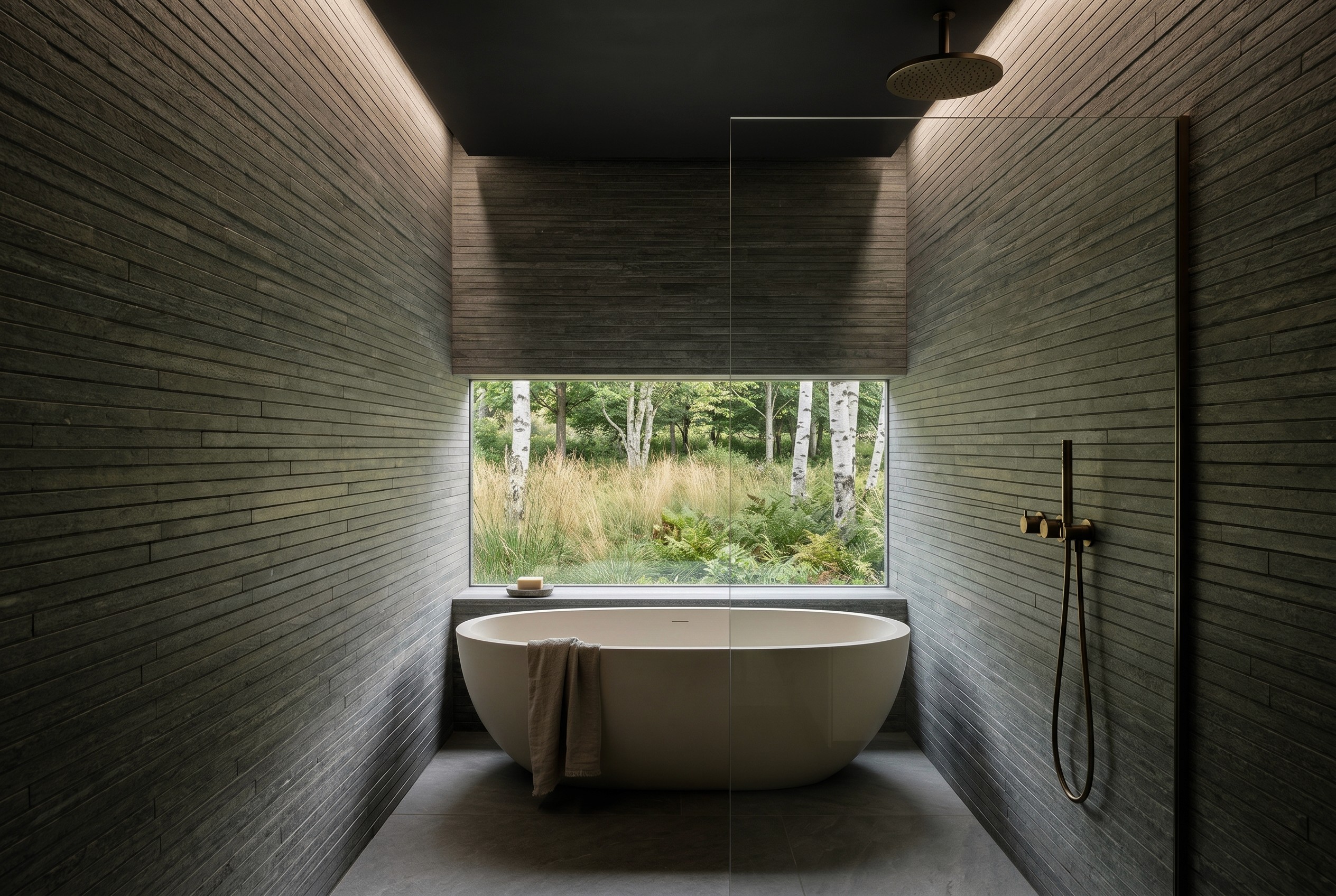
A continuous slanted wood-paneled fascia wraps the interior perimeter, establishing a datum line that mediates between wall and ceiling. Practically, it conceals spot lighting, curtain tracks, and mechanical distribution. Materially, it belongs to a restrained palette of natural finishes — white oak paneling, lime plaster — that let the architecture recede and the light do the work.